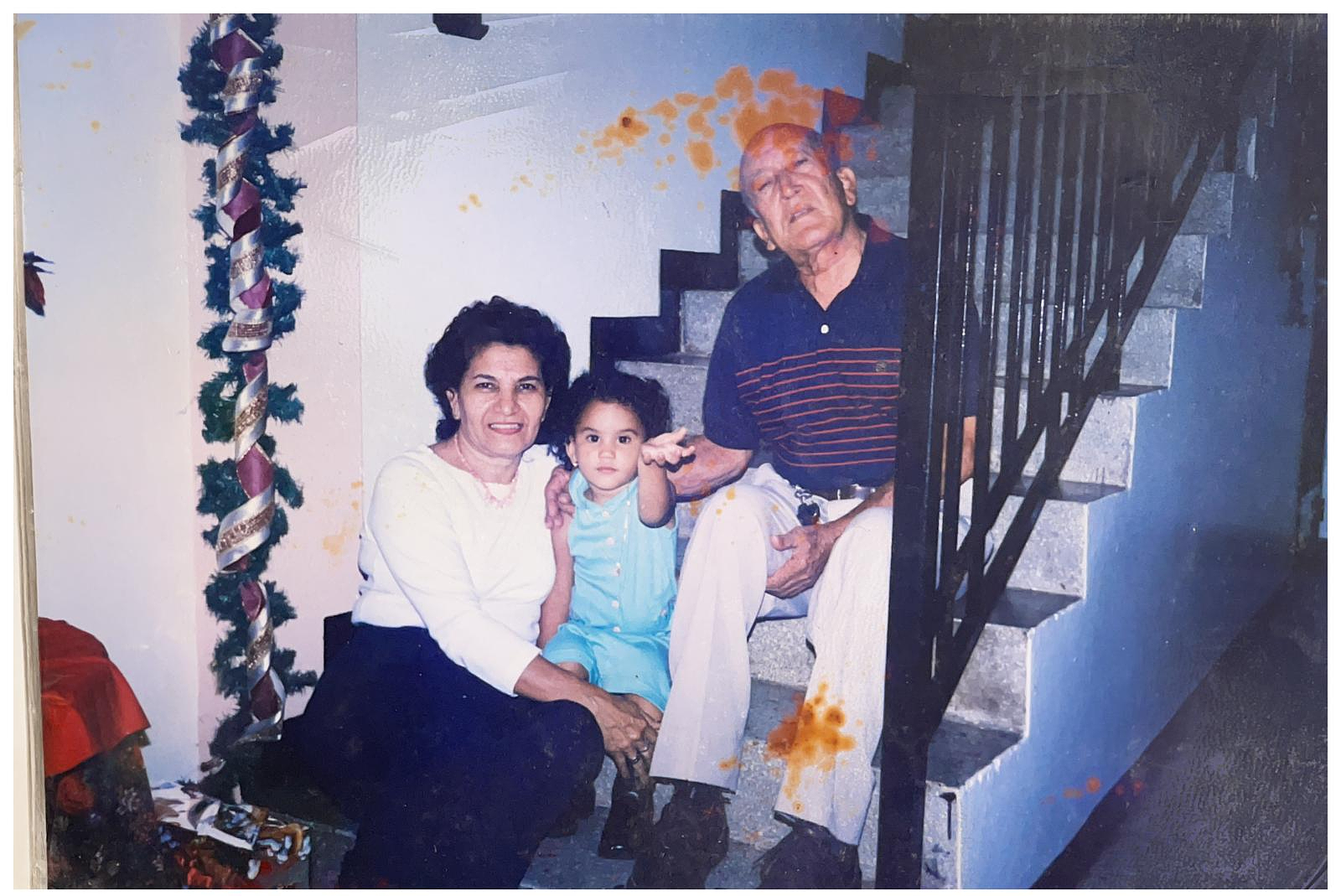

I was born in Carúpano, a little city located on the Venezuelan Caribbean coast. All of my childhood festive memories are associated with my grandparents’ home back in Carúpano. This is the time of my life I remember feeling the most nostalgic about when I think about the holidays.
My abuela’s house was so full of life, colours, smells and nostalgic flavours. All my aunts, uncles, and cousins together in the house, being loud, talking and laughing. One memory that has stayed with me is going to the supermarket with my grandma to shop for Christmas groceries and trying ‘Ponche Crema’ for the first time. ‘Ponche Crema’ is a popular Venezuelan cream-based liqueur, traditionally served during the Christmas season (sort of like our own version of eggnog).
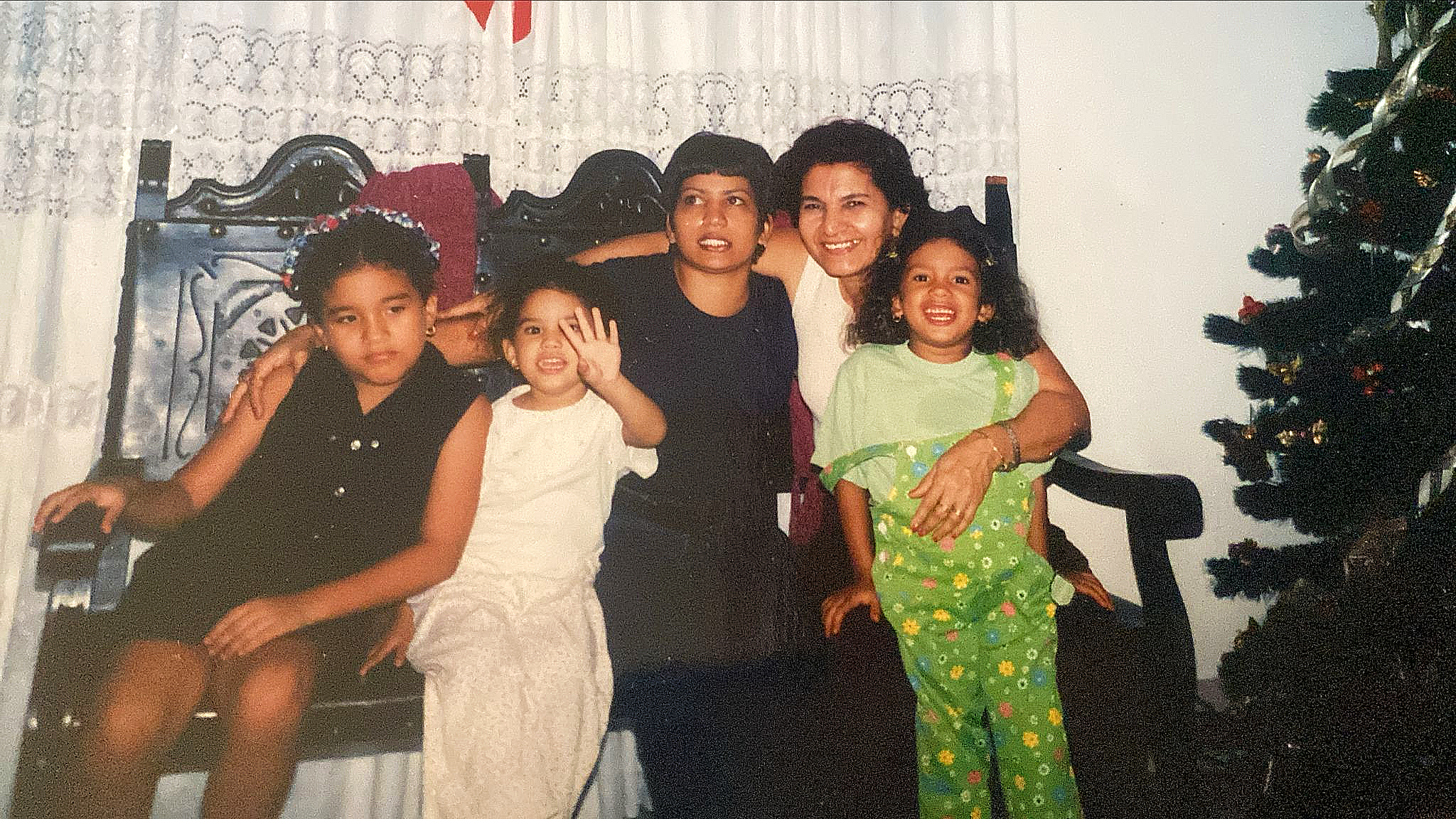
The most anticipated Christmas family activity (before the actual dinner or New Year’s Eve) was the ‘Hallacas’ preparation day. This is the most significant day in our Venezuelan festive traditions. Making Hallacas can be an arduous job; they take time, patience, and many hands, so that day literally becomes an exercise of collaboration:
Divided by stations, someone kneads the dough, another group trims the banana leaves, someone else cuts and ties the strings, another group makes the stew or chops the eggs and potato filling. Throughout the long, messy and slightly chaotic process, everyone spends time together while working in their own station. Each generation making their own jokes, singing ‘aguinaldos’ (Venezuelan Christmas carols), and reliving their childhood memories. I vividly remember hating that the adults would give us the ‘boring’ jobs (the easiest or safest!), like cutting the sides of the banana leaves, or anointing them with the homemade onoto oil (made from seeds of the Achiote tree native to South America).
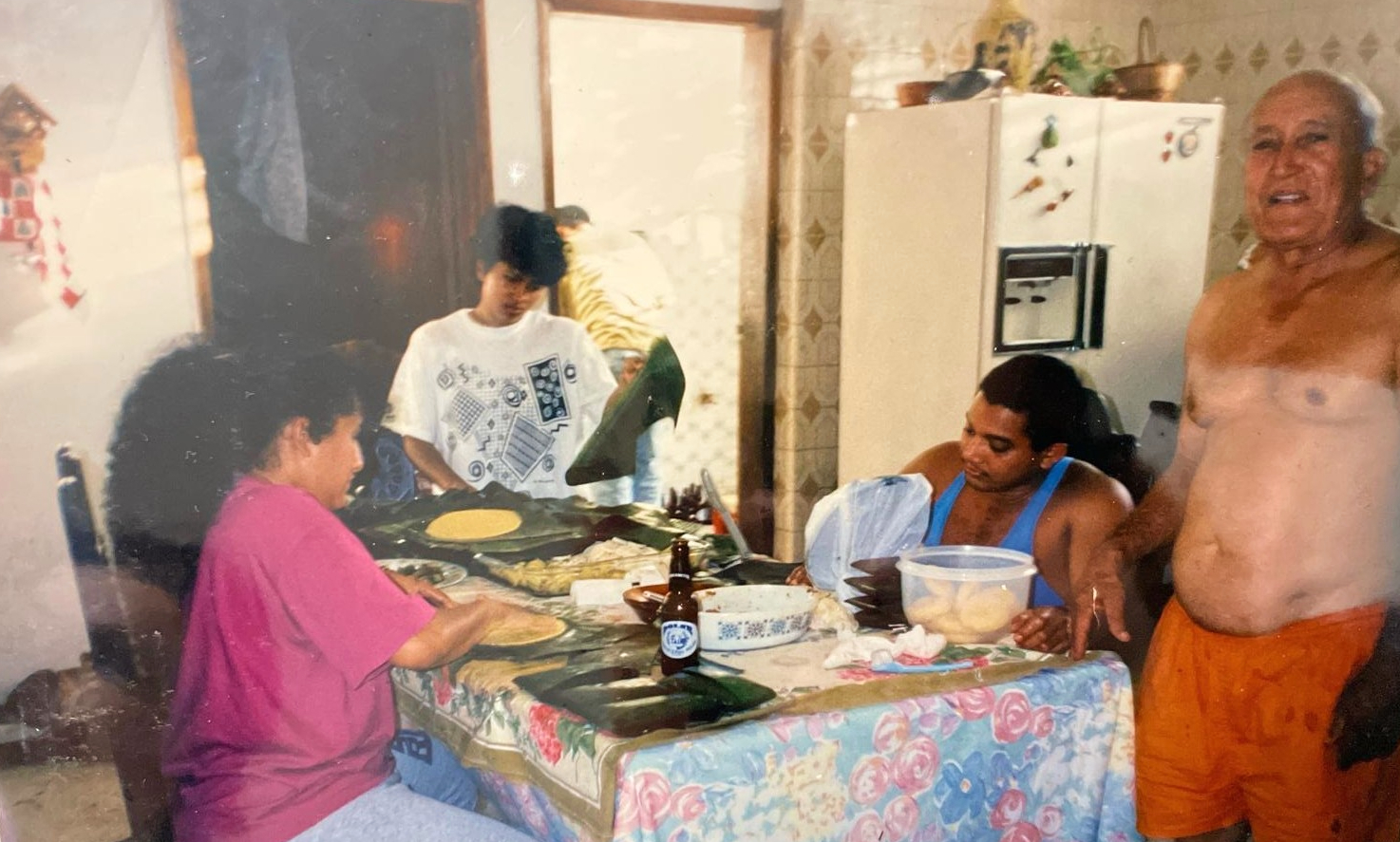
Even as a child I could see how magical it was. How there was something deeply ceremonial about the process itself – and how it kept us together as a family.
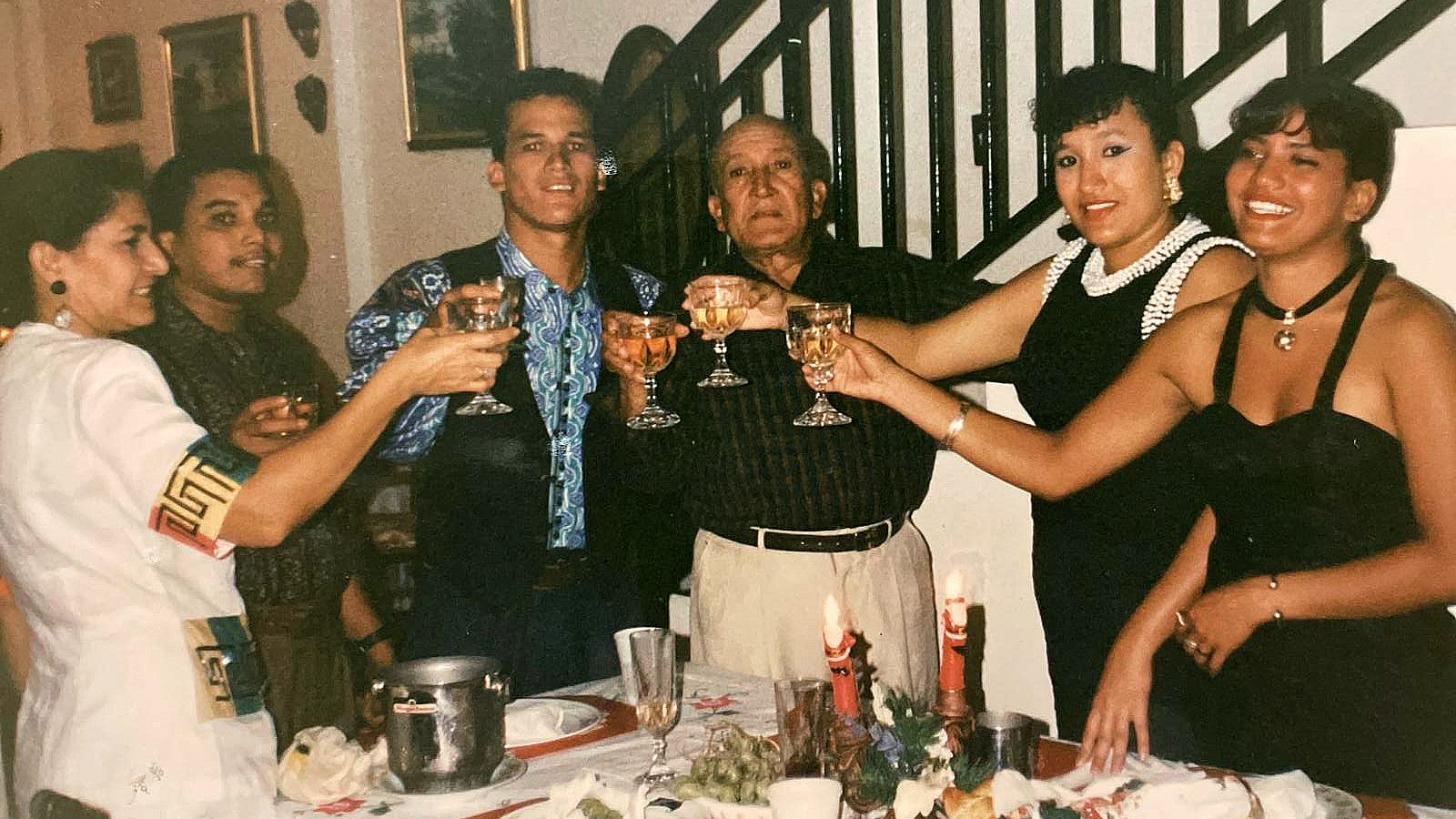
Moving abroad and blending traditions
In 2010, my parents made the difficult decision to leave Venezuela as the political and social situation grew increasingly unstable. Everyday life was marked by insecurity, fear of kidnappings, and violence. I still remember driving home with my mom and little sisters when she noticed a car following us, trying to see where we lived. This was a moment that confirmed how unsafe life had become. So, after more than 30 years of building a life in Venezuela, my parents prepared to move to Portugal.
Our first Christmas abroad was one of the biggest ‘cultural shocks’ for me growing up, as it was such a drastic contrast from what I was used to. Those early years were the most difficult, as I tried to adapt to a new country (and continent), language, and the change of familiar traditions. Food became another challenge, as ingredients for Venezuelan festive dishes were almost impossible to find, making the season feel even more distant.
Each year that passed, however, brought new memories, and new ways of feeling more connected to the life we were building. My mom found Venezuelan community groups, where she could find ingredients (and even buy batches of home-made hallacas!). Gradually, our celebrations became a mix of both worlds: some family members would eat the traditional Portuguese meal, while others ate the Venezuelan one, and then we’d finish off with our favourite Portuguese desserts (Rabanas or Aletria). The festive season became our own interpretation of both countries, which allowed us to relive the traditions we grew up with, while still appreciating the new rhythms and customs of our life in Portugal.
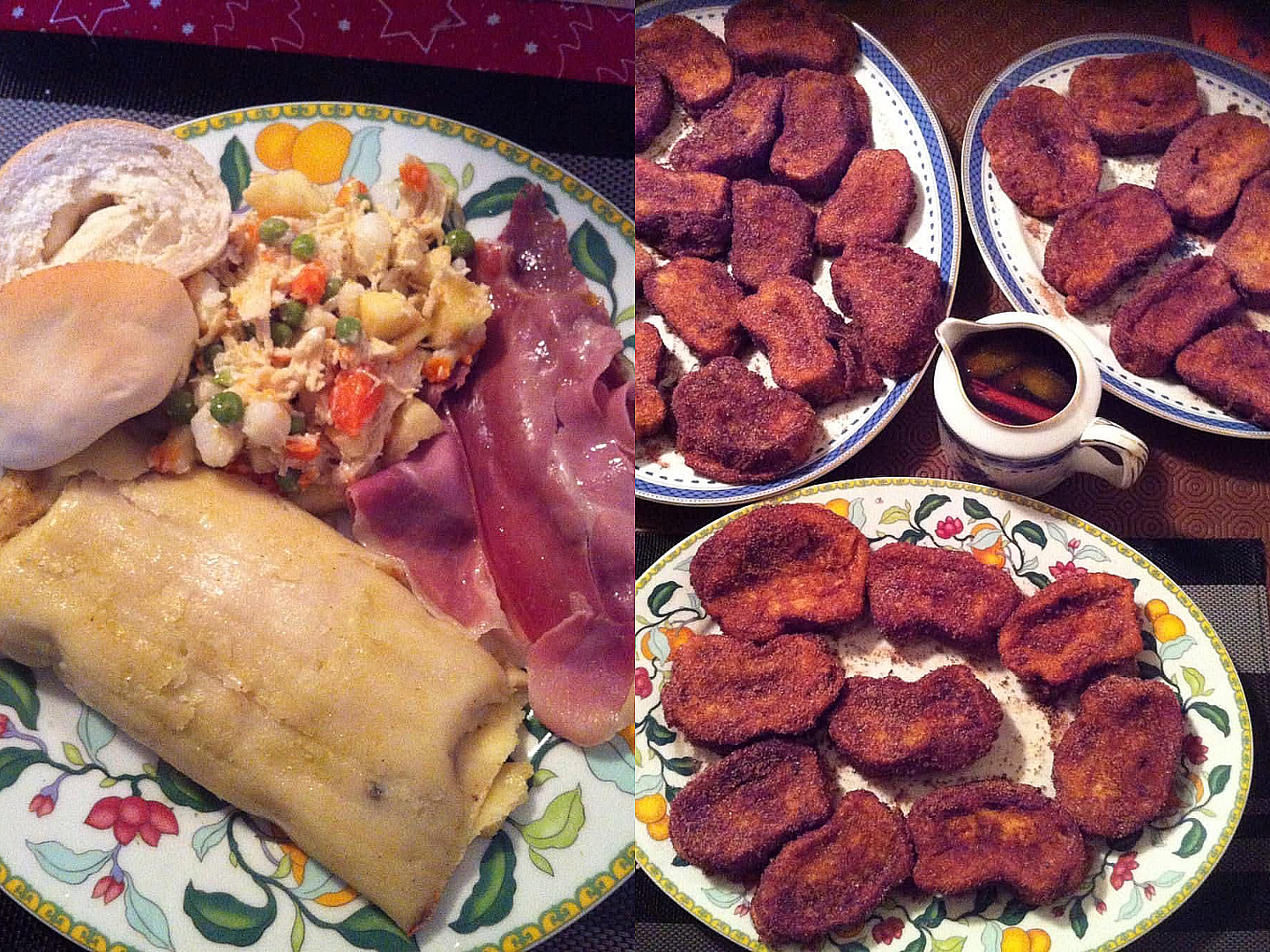
What Migration teaches us about the festive period
Across cultures and continents, festive seasons emerge as powerful meeting points for identity, memory, and belonging. For many people who have migrated, traditions are not static; they are faced with a dynamic process of evolution, adaptation and complex negotiations stretching across geopolitical borders and generations. This experience is shaped not only by the practical demands of a new environment, but also by the intricate layers of cultural, legal and emotional identity that migrants are faced with.
The migrant experience is inherently multifaceted, and this is reflected in how individuals manage these layers during the holiday season. This often involves the blending of old and new traditions. Food emerges as a powerful instrument, a cultural signifier, used to preserve traditional experiences, honour heritage and sustain transnational connections. The act of cooking and recreating dishes is in itself an adaptation, where affordability, availability and substitution of ingredients become embedded in the ongoing dialogue between the past and the present. These dynamics continuously reinforce the crucial need for support networks beyond immediate family. These periods can also highlight and bring visibility to the emotional complexity of experiencing a sense of dual or multiple “homes”, and in some cases, feeling a lack of “home”.
The act of recreating dishes brings comfort and cultural affirmation, yet it can simultaneously trigger sharper awareness of geographical and emotional distance. For many, particularly those who are navigating political uncertainty, unstable migration status, or forced separation from loved ones, these emotions of ambivalence, isolation, and longing can be significantly intensified. The practical logistics of these celebrations, from the financial strain to the possibility of sourcing specific items, become tangible elements in the daily struggles to achieve belonging and mitigate isolation.
Ultimately, it is important to highlight that, as each person navigates different festive periods throughout the year, intentional solidarity from the wider community can make a huge difference. Taking actions to actively engage with someone else’s festive celebrations is a first step and kind gesture that builds understanding and can affirm a sense of welcome and appreciation when building life in a different country than the one you were born or grew up in.
A word from my mom
“Talking about my traditions is opening a part of my heart. Every December, when I make Hallacas with my family here in Portugal, I feel as if I return, for a moment, to Venezuela – to the place I grew up surrounded by laughter, music, and the aroma of stews that announced that Christmas was near. In our home, Hallacas were more than food; they were a symbol of togetherness.
Traditions are the way our native land continues to accompany us. Even after we move to a different country, even when life is very different, and even when our hearts might ache with nostalgia: our traditions travel with us. Recreating these rituals, these dishes, is a way of saying: I have not forgotten my roots. And so, between our core memories plus the new practices we build, we continue reshaping our migrant story: a story that honours who we were, celebrates who we are, and dreams of who we will become.“