
What do we mean by a polarised world?

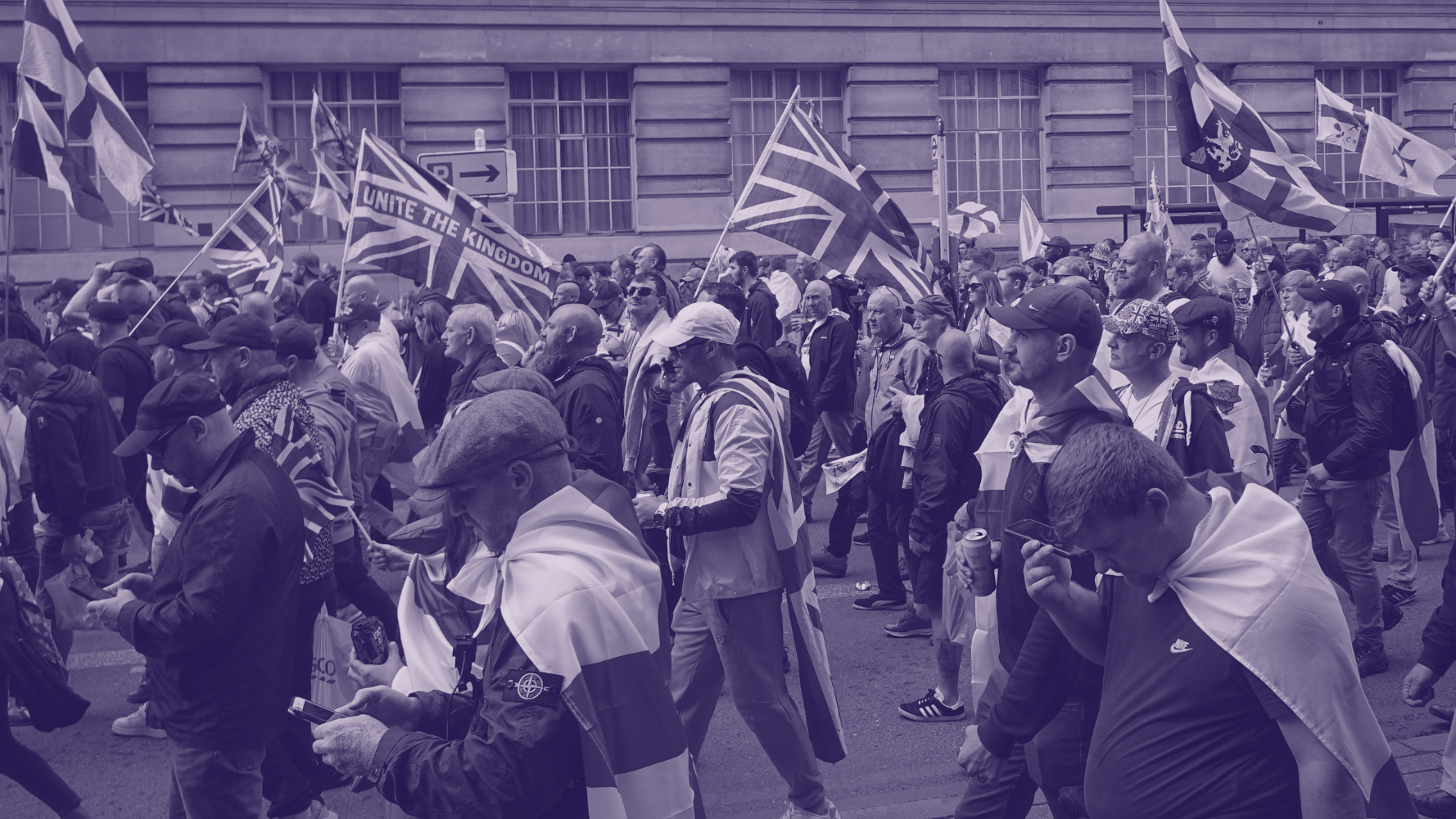
When we talk about a polarised world, we mean a society in which people are moving away from shared ground and towards more extreme and divided viewpoints. We see this across many issues, but particularly around migration. In recent years, we’ve seen increasing support for political movements that present migration as a problem. We see misleading information spreading online and in parts of the media. We see language from politicians that would once have been challenged becoming normalised. The result is a climate that can be deeply harmful.
For some members of our community, these issues are not abstract. In recent months, they have experienced hostile protests outside their homes. It is a difficult and upsetting time for many. It was against this backdrop that we came together for our Refugee Week event. But while we wanted to acknowledge those challenges, we also wanted the evening to be hopeful. We wanted people to leave feeling that there are solutions and that all of us have a role to play in building stronger and more connected communities.
How do we build connection?

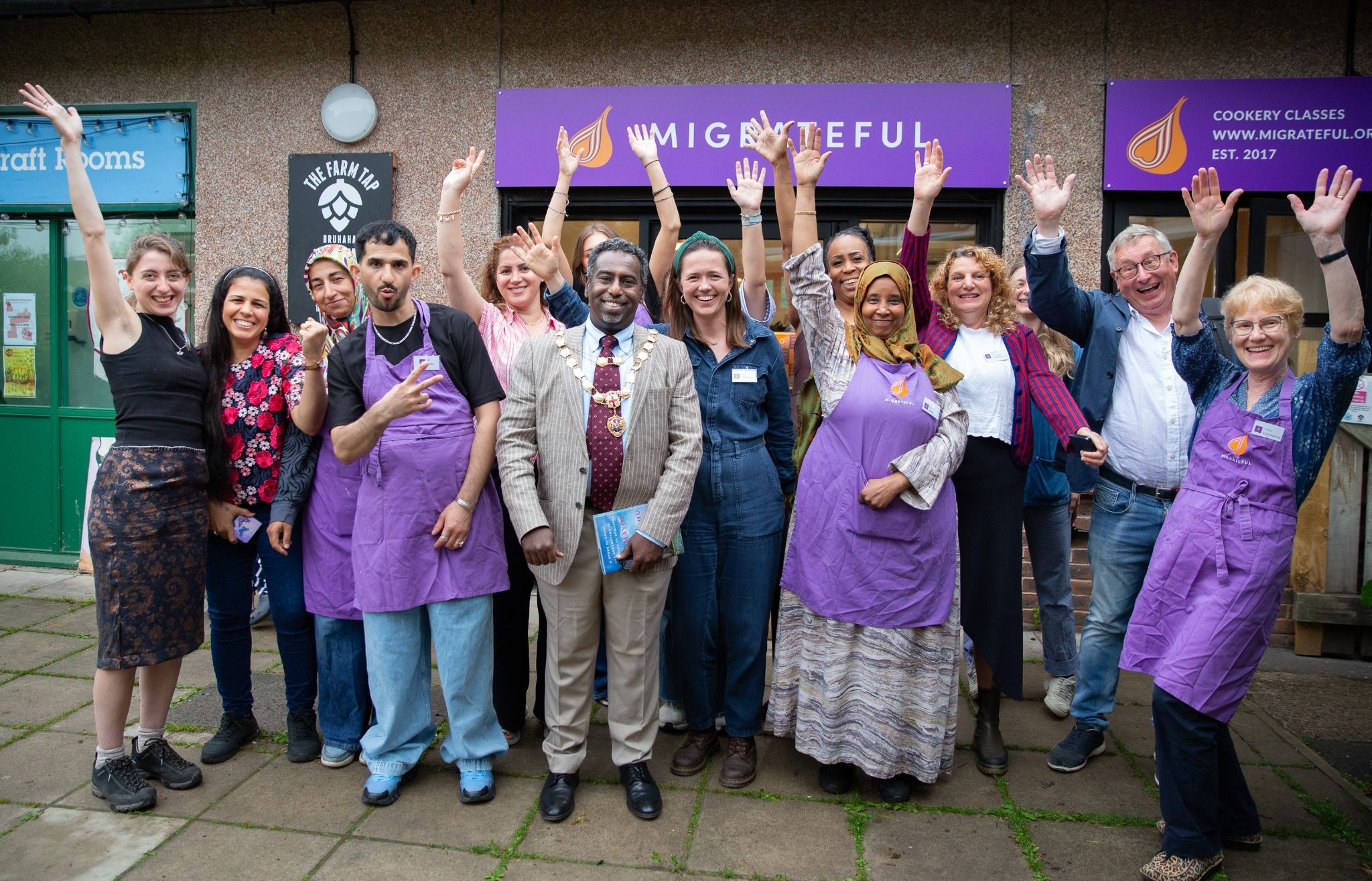
To discuss this topic, I was joined by an inspiring panel: Yassin Mohamud, Lord Mayor of Bristol; Kalpna Woolf, founder of 91 Ways to Build a Global City; Kele Alexander, Migrateful chef and community leader; and MoYah, award-winning rapper, educator and activist. Between them, the panel brought lived experience of seeking asylum, forced displacement and migration, alongside leadership across civic, cultural and community life. While each panellist brought a different perspective, there was one theme that emerged again and again: whether through food, music, storytelling or sport, the more opportunities we create for people to connect across differences, the harder it becomes to see one another as “us” and “them”.
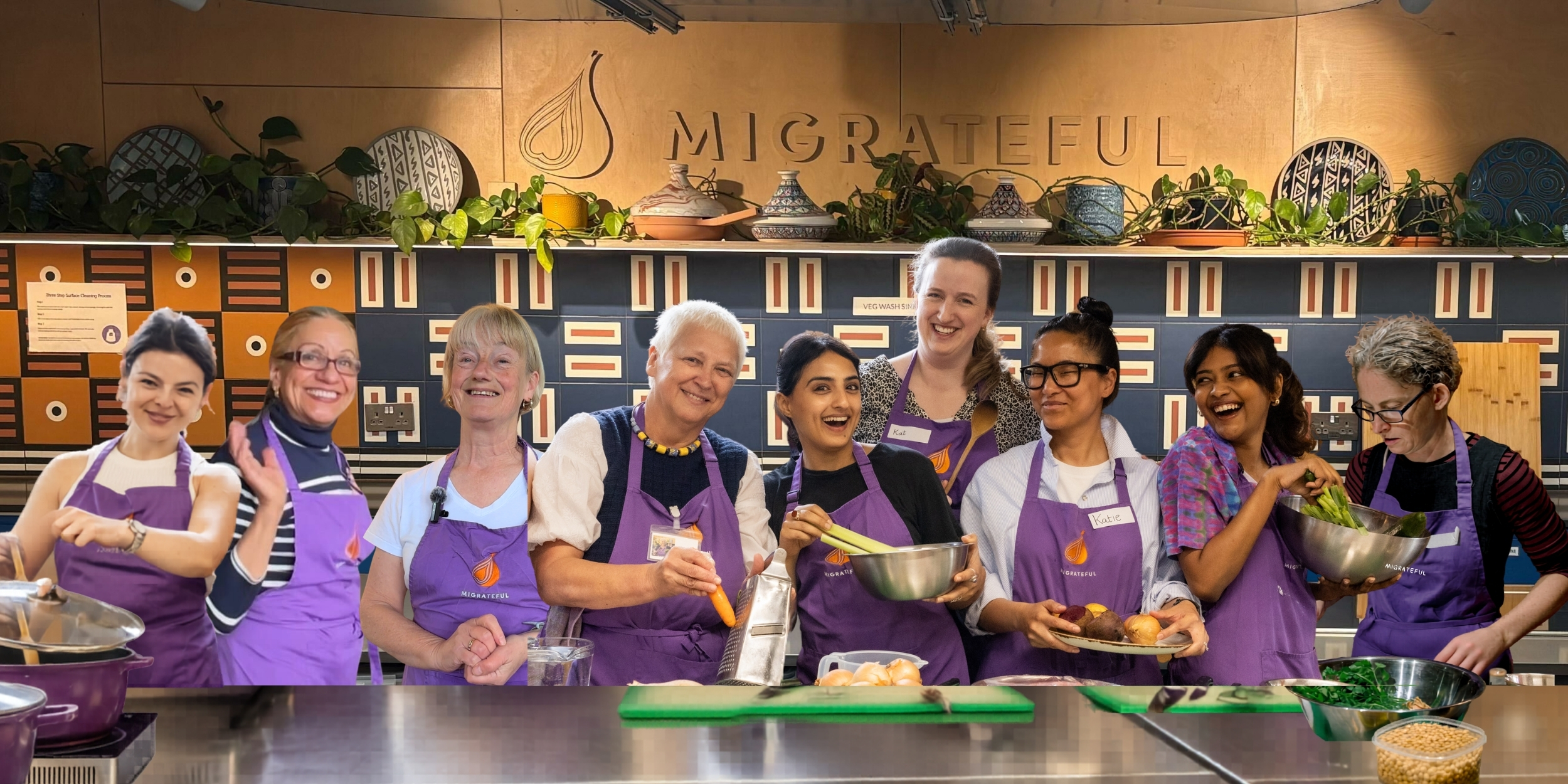
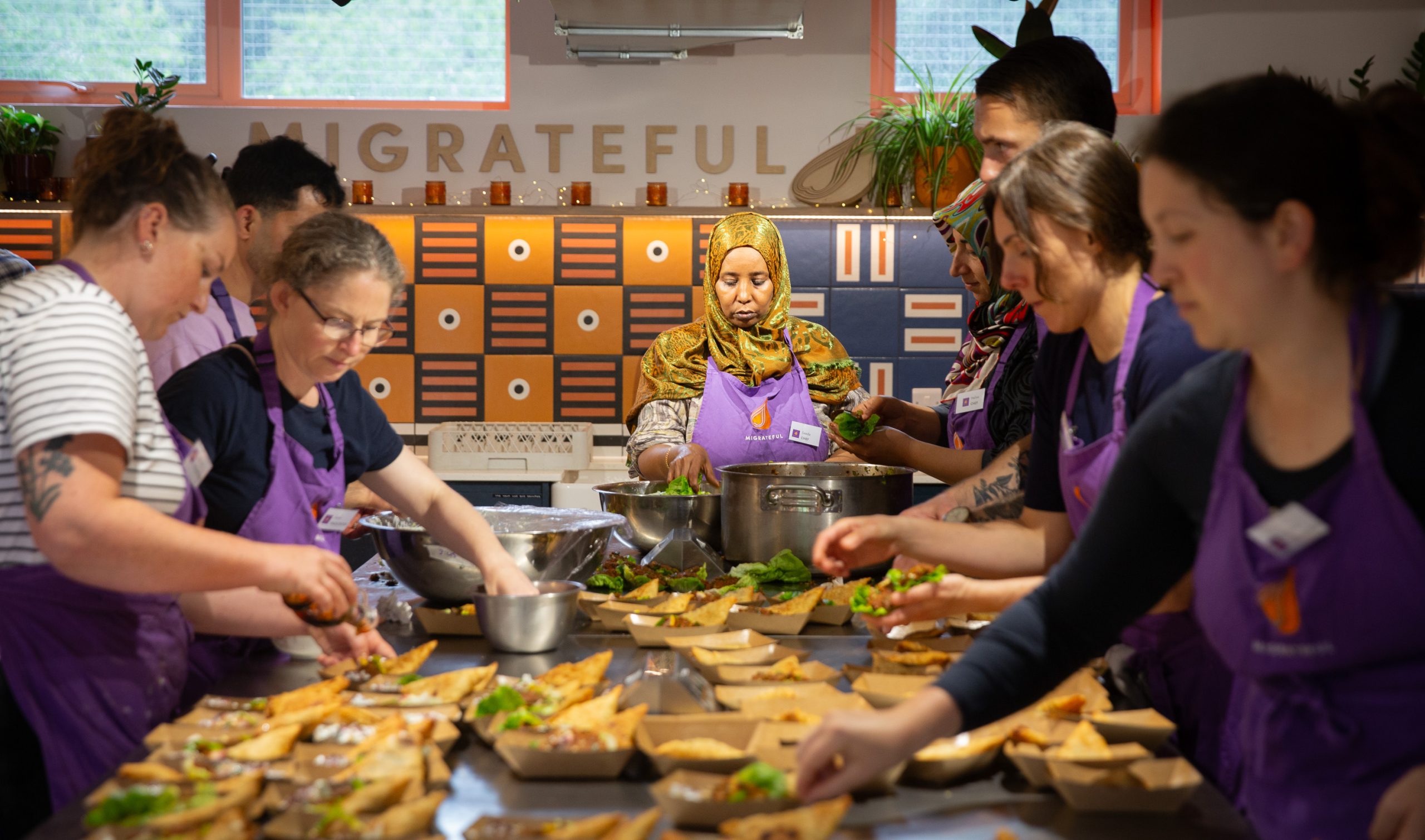
This idea sits at the heart of Migrateful’s work. In my opening remarks, I explained why food is such a powerful tool for building connection. Around a dinner table, barriers come down, conversations begin, and people discover common ground. I founded Migrateful in 2017 in the wake of the Brexit referendum, when anti-migration rhetoric was widespread in the media. Looking for solutions to challenge this, I came across Contact Theory, a social psychology theory which shows that prejudice towards a group can be reduced when people have meaningful contact with members of that group. Often, people’s perceptions about a group are formed by media coverage and political rhetoric rather than personal relationships. But when they meet someone face to face, share an experience and get to know them as an individual, perceptions can change.
The panellists brought this idea to life in different ways. Kalpna Woolf and Kele Alexander spoke about the transformation they have witnessed when bringing people from diverse backgrounds together through food, while Yassin Mohamud highlighted the importance of creating opportunities for connection through civic and community institutions. He had just come from a meeting with leaders from different faith communities and spoke about the importance of people from different faith groups visibly demonstrating peaceful relationships and mutual respect as a form of positive role modelling.
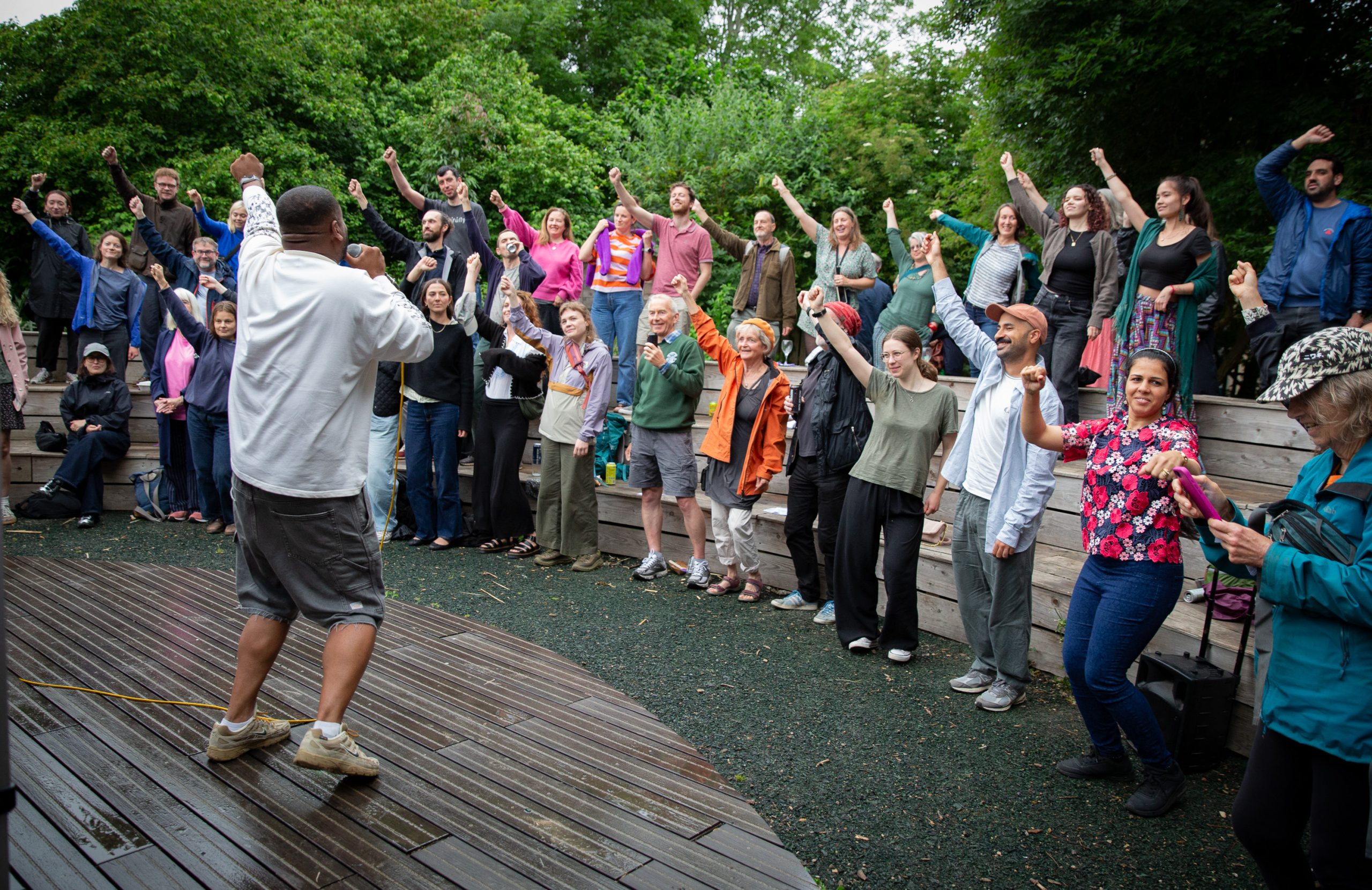
Drawing on his experiences as a refugee, artist and educator, MoYah spoke about the universal power of music and dance to unite us as humans and help us develop a shared understanding of each other. He reflected on how Refugee Week provides a fantastic opportunity for people from refugee and migrant backgrounds to share their arts and culture, helping to present refugees in a positive light and challenge negative stereotypes.
He also encouraged us not to lose sight of the progress that has been made. Reflecting on conversations with his older sister, he noted that she experienced forms of racism growing up that would be far less acceptable today. While there is still much work to do, he argued, recognising how far society has come can help us find the hope and motivation needed to keep moving forward. He also spoke about the importance of events like this one in bringing people together to discuss these issues and stay hopeful that change is possible.
How do we reach beyond our echo chamber?

I agreed with MoYah that events like this are important, but I also felt it was important to raise the question: at events like this, is there a risk that we are simply preaching to the converted? One of the problems with polarisation is that people increasingly retreat into groups of like-minded individuals. Those who are broadly positive about migration spend time with others who share similar views, while those who are more sceptical often do the same. As a result, opportunities for meaningful dialogue become increasingly rare. If we are serious about building connection, we need to think about how we reach beyond our existing networks and create opportunities for people from different backgrounds and perspectives to meet one another.
At Migrateful, there are a few ways we try to reach different audiences. When companies book our classes for team-building events, many of the employees have not chosen to attend themselves, which brings in a different demographic. Also, thanks to children gifting their parents Migrateful vouchers, we often have parents attending classes who say they would not have chosen to come of their own accord.
Kele also shared how Migrateful has recently started running cookery classes with students from a local school where there had been reports of racism and parents displaying St George’s flags. Students were interviewed before and after attending Kele’s Trinidadian class. Beforehand, some expressed negative views about refugees; afterwards, they spoke enthusiastically about the experience. Kele shared that it was a really moving reminder that contact under the right conditions can challenge assumptions and change attitudes.
What can people do to help?
Towards the end of the discussion, an audience member posed an important challenge: it’s one thing to come together and talk about polarisation, but what are we actually going to do when we leave this event to help?
I then asked the panellists to share one thing we can each do to tackle polarisation, and a common theme emerged: seek out opportunities to connect with people whose backgrounds and experiences differ from your own. This sometimes means putting ourselves in situations outside our comfort zone, where we may feel different to those around us, but there is so much to be gained from doing so. Kalpna shared how much she values attending activities at her local community centre, where most participants are white women. Through simple, everyday interactions over cups of tea and Pilates classes, she has learned about their stories and they have learned about hers. We also discussed the importance of having courageous conversations that respectfully challenge misinformation about migration when we encounter it. By being willing to question inaccurate information and stereotypes, we can help reduce the risk of extreme and misinformed views about migration taking hold.
Ultimately, the evening left us with a simple but powerful message: connection does not happen by accident. It is something we must actively create through the conversations we have, the communities we build and the opportunities we create to meet people whose experiences differ from our own.